Daily wear is a hardware question, not a moon poem. If you want moon water jewelry safe to wear, you need a gasketed vial, clean water on a short schedule, and stones that will not sludge against your skin. This Moon Routine guide covers seals, mold, metal rash, and when to empty the pendant—not bowl rituals or mala calendars.
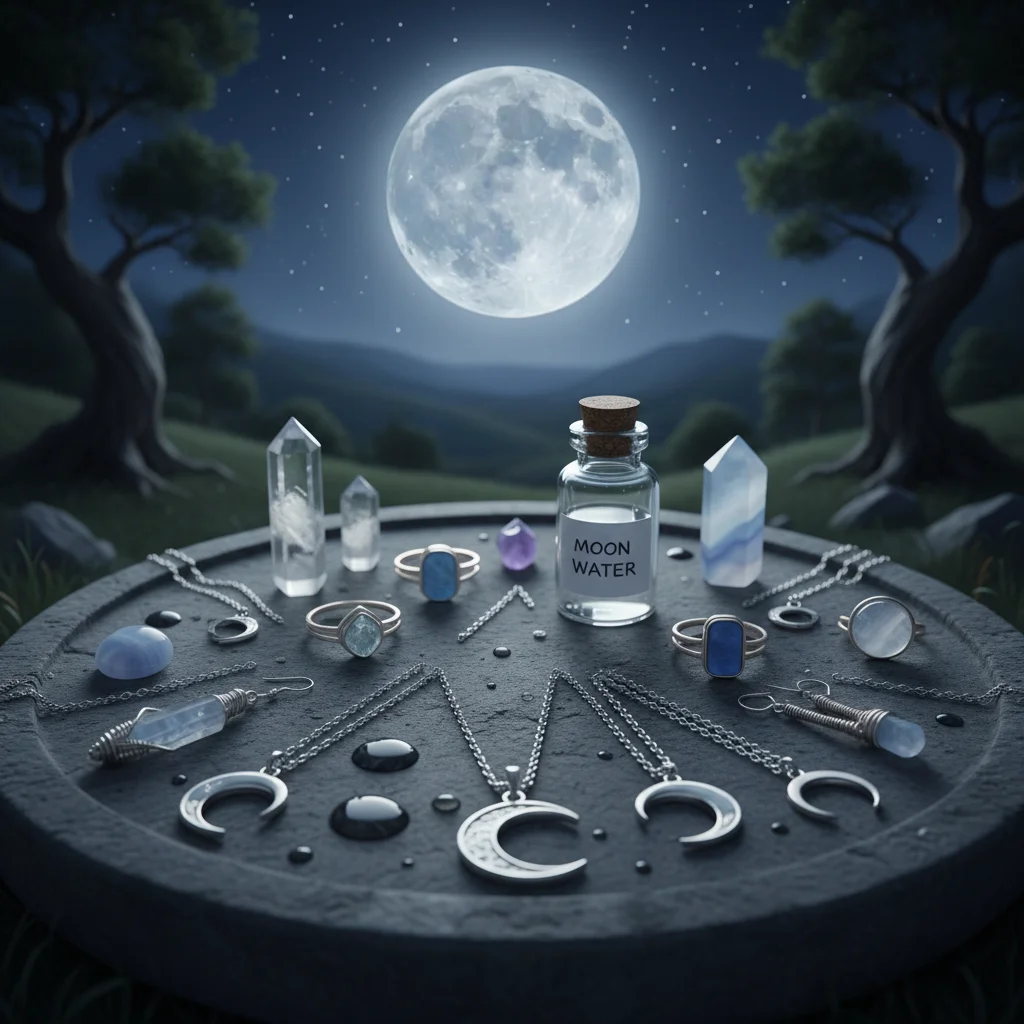
Start with product choice on what a moon water necklace actually is and bottle versus sealed vial pendant. Charge only after the cap passes: how to charge a moon water vial.
What “safe to wear” means for a vial pendant
Safe daily wear means the object does three boring things well: it stays closed against a shirt, it does not grow film inside the glass, and the metal at your neck does not turn green or itch. Ritual timing does not change any of those physics.
A sealed glass vial on a chain is jewelry that may hold a few drops of liquid. It is not a drinking bottle, not a desk crystal bottle, and not a glued cork souvenir that cannot be emptied. If you cannot unscrew the cap, treat the piece as dry jewelry and stop trying to refill it.
Cloudy water is not “charged.” It is usually biofilm, stone dust, or warehouse liquid that sat for weeks. Empty it. If the inside cannot dry with the cap off, stop filling. A cloudy vial against skin is a hygiene problem before it is a spiritual aesthetic.
Who should wear it daily — and who should skip
Daily wear suits someone who will leak-test overnight, empty on a schedule, and accept that empty-and-dry is valid jewelry. Skip daily fill if you forget care tasks, swim or shower with jewelry on, or have nickel/metal allergies and only see “alloy” in the listing.
Skip water entirely if you bought a cork push-fit, a glued bail, or soft/dyed chips already sealed inside. Soft stones and mystery coatings do not belong in a wearable vial. Prefer a dry bezel or a clear-quartz chip you can remove.
Parents and anyone sharing towels should treat refill water like any other open liquid: clean tap or distilled only, no oils, no mouth contact, no “sip for manifestation.” Volume is tiny and seals are not food-grade.
- Good fit: screw cap, visible gasket, borosilicate or thick soda-lime glass, soldered bail
- Poor fit: cork only, glue at the bail, pre-filled mystery water, acrylic “glass”
- Skip fill: you will not empty every few days or after travel
Hygiene playbook: seals, mold, refresh, when to empty
Leak-test before the first commute: fill with tap water, cap firmly, wrap in a paper towel, leave in a zip bag on its side for eight hours. Spots on the towel mean return or keep empty. Do not “charge” a leaker and hope intention tightens the thread.
Refresh schedule for a filled vial: empty every 48–72 hours, rinse, dry with the cap off for a full day when you can. Empty sooner if the water smells, clouds, or if you wore the piece through heavy sweat. After flights, empty before you pack—cabin pressure plus a weak cork stains shirts in the overhead bin.
Watch the gasket and cork line. Dark film, fuzzy spots, or a sweet-sour smell at the seal means discard the water, wash with mild soap, and air-dry. If mold returns quickly, retire the seal or stop using water. Replace corks that crumble; crumbling cork sheds into the liquid and against skin.
Perfume, lotion, and sunscreen at the neckline leave residue on metal and glass. Wipe the outside dry after applying products. Do not store a damp vial in a closed jewelry box overnight.
Stones that may sit in water vs dry display
Wearable vials are for inert chips or for water alone. Clear quartz and some hard agates are the usual safe-ish choices when polished and free of dye. Soft, porous, or copper-bearing stones do not belong in a sealed necklace: selenite, malachite, pyrite, raw turquoise, and dyed howlite can sludge, flake, or leave residues on gaskets.
Coated or “aura” chips can shed film into the water. If the listing cannot name the mineral and treatment, keep the chip dry outside the vial or skip it. Rose quartz is popular in this niche; prefer tumbled pieces and still empty on schedule—see rose quartz moon water jewelry for stone-specific care, not as permission to ignore seals.
Never assume a desk crystal bottle used the same stone rules. Open bottles get dumped. Pendants trap liquid against skin and metal for hours.
Shower, gym, perfume, and sleep
Shower and bath: take it off. Hot water softens adhesives, expands cheap gaskets, and drives soap film into threads. Chlorine and salt water are worse. “Waterproof” marketing on fashion jewelry usually means the chain survived a splash photo, not a sealed liquid vessel.
Gym and runs: empty first or leave it home. Sweat plus a marginal cork equals a wet shirt and skin irritation. If you insist on wearing it empty, check the bail after impact—open bails drop vials on treadmills.
Sleep: empty vials can stay on if the chain is comfortable and the clasp holds. Filled vials should not. You roll onto the glass, stress the gasket, and wake up with a damp collar. Perfume and overnight lotions sit against metal longer while you sleep; that is how plating fails and rashes start.
Workplace and travel: treat a filled vial like any liquid in a bag. Pad it. Do not clip it where a laptop lid can crush the glass. If the piece is sentimental, wear it empty and charge on a dish at home instead of risking a leak on transit.
Buying checks before you trust a listing under $40
Under many price points you are paying for chain photography, not a gasket. Demand a close-up of threads and the seal. Ask whether the cap unscrews. If the answer is a moon poem, skip. Weight in grams helps separate glass from acrylic; acrylic scuffs and can smell, and neither material makes water “more charged.”
Materials checklist before you buy:
- Screw cap with a visible O-ring or gasket (not cork-only)
- Glass thickness you can see in a side photo; bail soldered or closed metal, not glue
- Empty and dry preferred; refuse pre-filled warehouse liquid
- Named metal (or clear plating warning) if you have skin allergies
- Care sheet that mentions emptying—not only “charge under the full moon”
This site used to mix mala, cord-cutting, and blue-moon calendar posts with jewelry URLs. Those pages may still load. They are not this product. Stay on vial hardware guides when the question is daily wear safety. For meaning-of-the-object copy without hygiene, use crystal vial pendant meaning only as a sibling—not as a substitute for a leak test.
Honest limit on TikTok “charged water” claims: structured rituals can help some people feel regulated. That is wellness framing, not antimicrobial magic. The water does not stay clean because you set an intention. Your empty-and-dry habit does the safety work.
Frequently asked questions
Is moon water jewelry safe to wear every day?
Only if the cap passes a leak test, you empty on a short schedule, and the metal does not irritate your skin. Empty-and-dry daily wear is often safer than keeping water inside.
How often should I empty a filled vial pendant?
Every 48–72 hours at most, and immediately if the water clouds, smells, or after heavy sweat or flights. Dry with the cap off when you can.
Can I shower or swim with a moon water vial?
No. Heat, soap, chlorine, and salt stress seals and leave residue in threads. Remove it like any fashion pendant with a liquid chamber.
Which crystals are unsafe inside wearable water vials?
Skip soft, porous, copper-bearing, or heavily dyed chips (selenite, malachite, pyrite, dyed howlite). Prefer inert polished quartz or keep stones dry outside the vial.
Does cloudy water mean the vial is charged?
No. Cloudiness usually means film, dust, or old liquid. Empty, rinse, and dry. If it returns quickly, stop filling and check the seal.